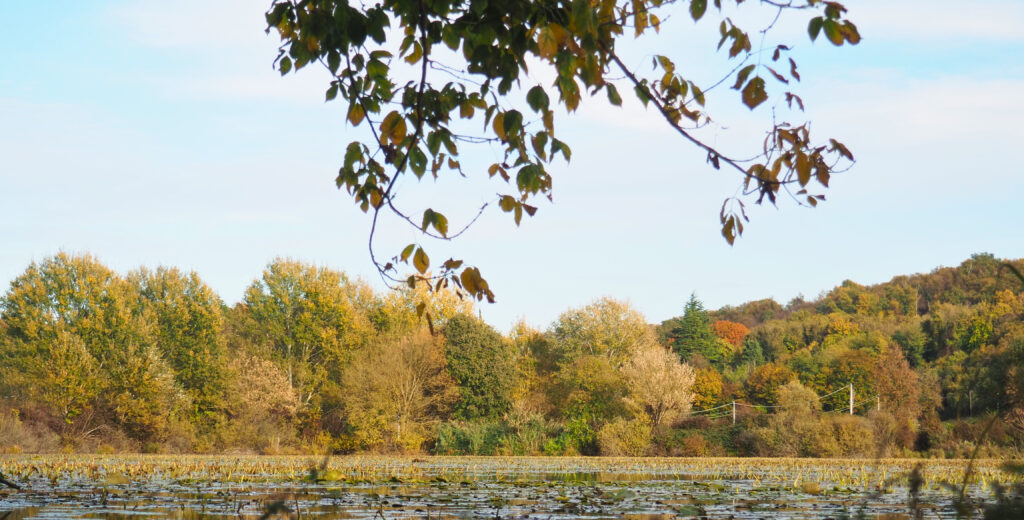
From gentle hills to high mountain pastures, five routes through Vicenza’s autumn foliage: woods in a thousand shades, quiet villages, wine cellars and country trattorias.
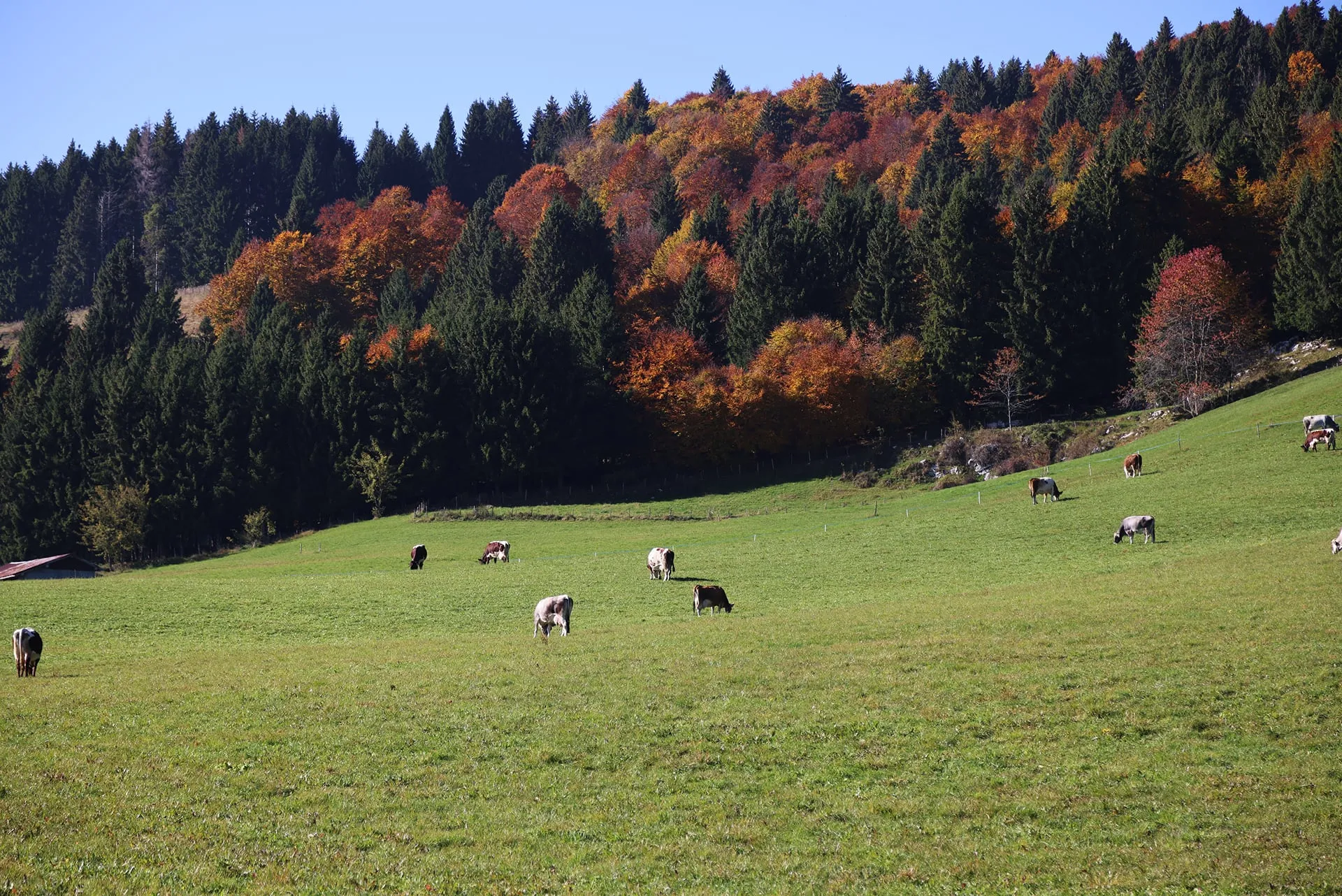
October and November light up the province of Vicenza like few other places in Italy. In less than an hour you pass from the mild valleys of the Colli Berici to the golden larches of the Altopiano dei Sette Comuni, through vineyards, beech woods, chestnut groves and fir forests.
This is the season for memorable photographs, trails far from the crowds and a palette of soft, pastel colours. Here are five places to mark in your diary, each with its own perfect spot for the camera.
1. Colli Berici and Lago di Fimon: the mirror that holds autumn
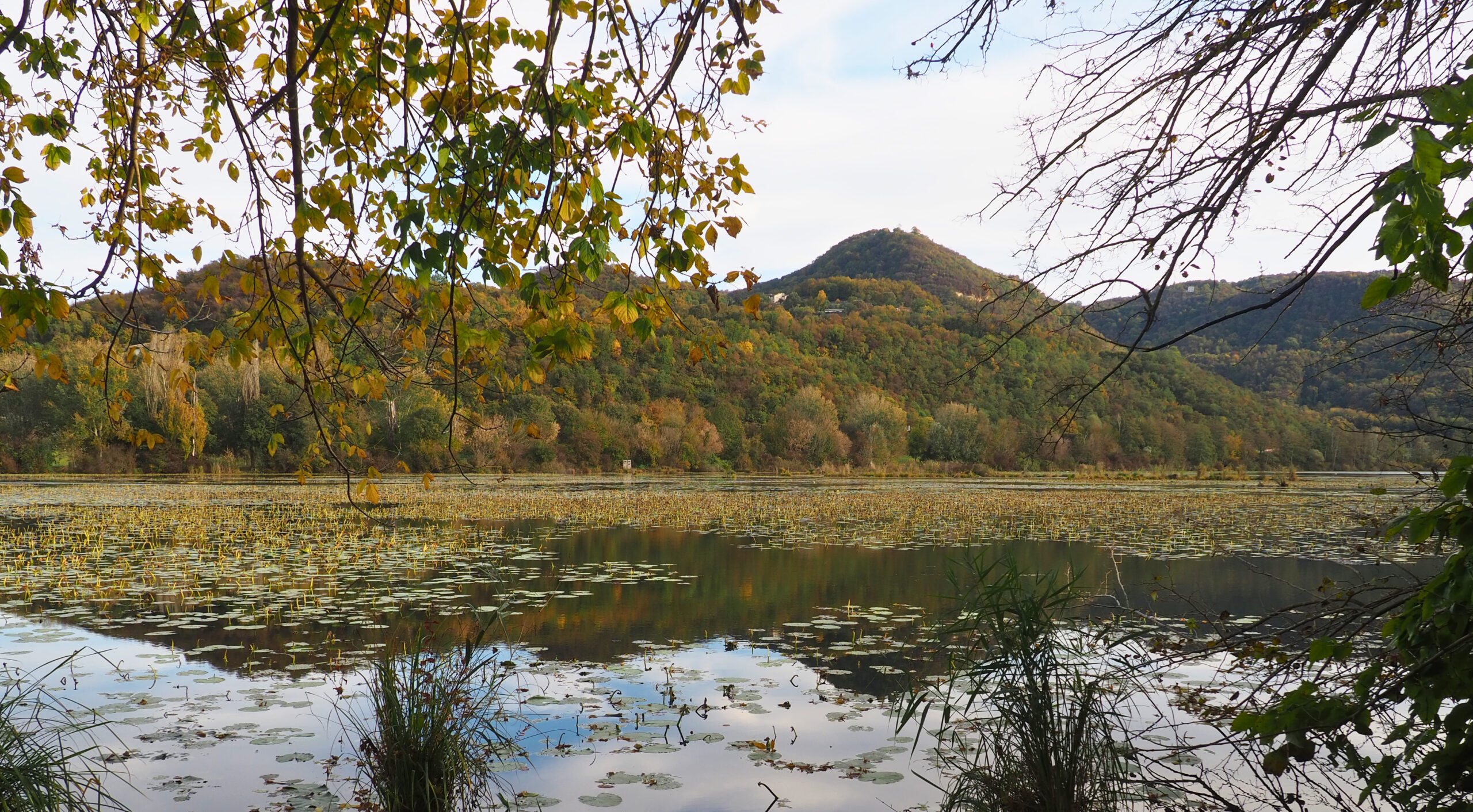
Just seven kilometres from Vicenza, the Colli Berici open into soft valleys that look hand-painted in autumn. Woods of hornbeam, downy oak and chestnut turn rust and amber, the vineyard rows shift to red, and quiet back roads wind past dry-stone walls and old farmhouses.
The heart of this landscape is Lago di Fimon, near Arcugnano. It is the last natural lake in the Berici, a glacial remnant cradled by the hills: a small, shallow stretch of water that seems made to mirror the colours of the slopes.
Time has left deep traces here. Pile-dwelling villages once stood on its shores, studied as early as the nineteenth century by the naturalist Paolo Lioy, who devoted a book to Fimon in 1876. Lioy also handed down the legend of a treasure hidden in the valley, buried deep in the woods and never found.
On late October mornings, mist settles on the reed beds and the lake takes on a suspended, almost unreal air.
And then there is the monster. For years, tales have circulated of mysterious creatures moving beneath the surface, so much so that some have invoked Loch Ness. More prosaically, the lake is home to large wels catfish, but the story keeps its charm and makes every sunset stroll a little more of an adventure.
The loop around the lake takes about an hour at an easy pace, among swans, herons and golden reflections. With more time, venture into the Valle dei Mulini or along the Sentiero Archeologico, or cycle out from Vicenza on the Riviera Berica cycle path.
The photo spot
From the lakeshore, take the path that climbs through the woods towards the Valle dei Mulini. After a few minutes, turn around: the lake opens up below, framed by colourful treetops, with the plain fading towards the horizon. The best moment is dawn, when the mist lifts off the water; failing that, the low, raking light of late afternoon.
At the table
The country trattorias of the Berici are the realm of home cooking. Don’t miss coniglio in tecia, rabbit slow-cooked in the pan with aromatic herbs, and baccalà alla vicentina, the city’s signature dish, served with soft polenta. In your glass, a red from the Colli Berici such as Tai Rosso, fragrant and easy to drink.
2. At the foot of the Piccole Dolomiti: hamlets, beech woods and high-valley silence
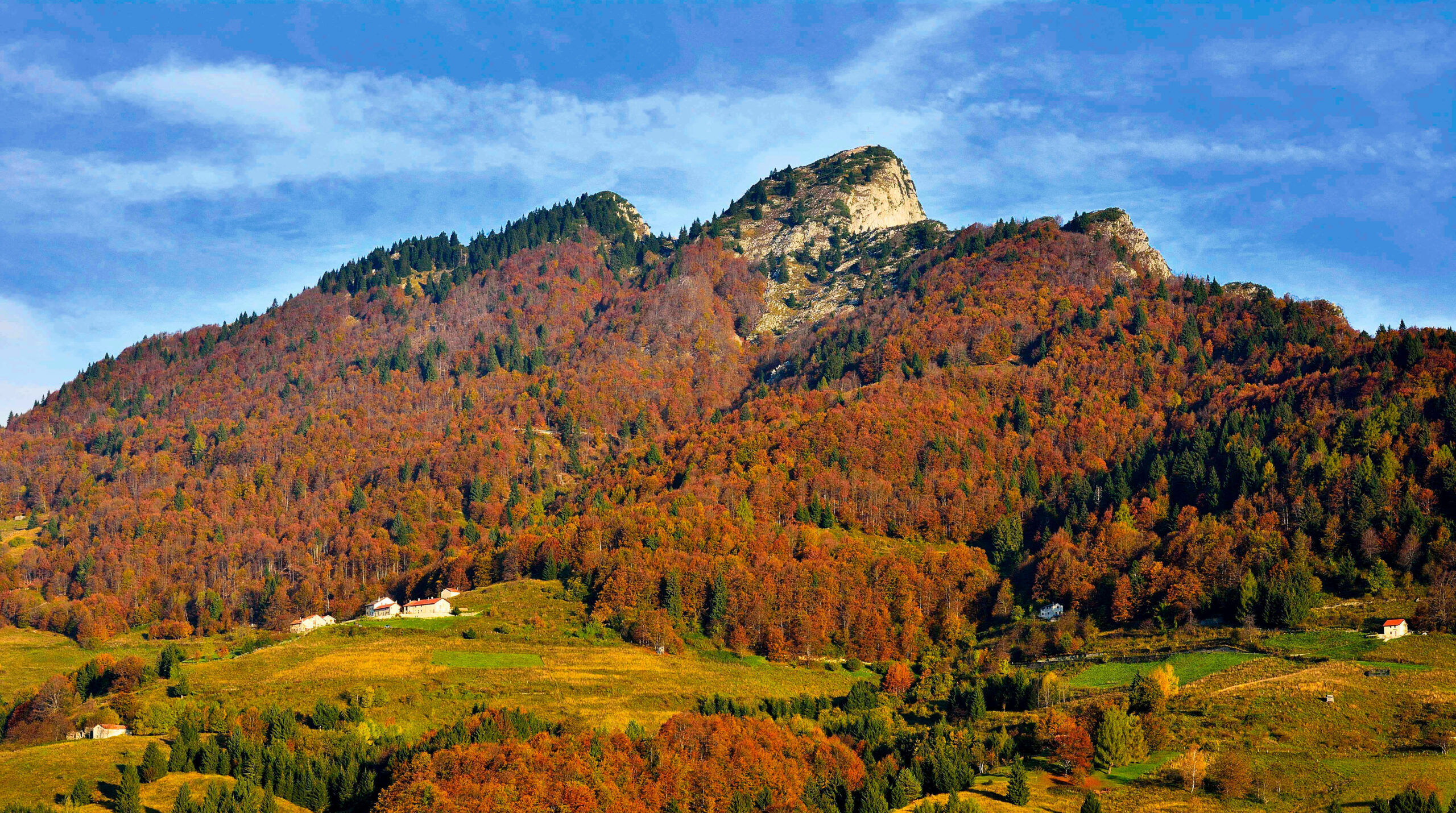
Between Recoaro Terme and Arsiero runs a secret stretch of foothills, far from the beaten track. Narrow lanes climb towards old stone hamlets, where houses huddle around a fountain and a wayside shrine. Above them, the peaks of Carega and Pasubio keep watch.
In autumn this corner of the Prealps reveals a surprising botanical variety. Lower down, chestnut groves glow yellow and bronze; higher up, the beech woods burst into coppery red, while dark fir forests provide the counterpoint. The result is a mosaic of colour that changes at every hairpin bend.
The valleys of Recoaro, the Leogra and Posina are remote, silent places, where you are more likely to meet roe deer than hikers. Here the mountains keep their authentic character: hand-mown meadows, neat woodpiles, paths linking one hamlet to the next as they always have.
Overlooking it all is the Ossario del Pasubio, on Colle Bellavista, about two kilometres from the Pian delle Fugazze pass. Inaugurated in 1926, it was the first ossuary built after the Great War and holds the remains of 5,146 fallen soldiers, 40 of them Austro-Hungarian.
Its 35-metre tower recalls a lighthouse and dominates the Val Leogra: the cross-shaped lantern at the top can be seen from afar, a tribute to the memory of those who fought on these mountains.
For keen walkers, the area offers celebrated routes such as the Strada delle 52 Gallerie, the Road of the 52 Tunnels, which climbs to Pasubio from Bocchetta Campiglia. Yet even a simple stroll through the hamlets of Recoaro or along the Posina stream brings unforgettable colours and views.
From the Ossario, the Strada del Re continues towards Campogrosso and crosses the Ponte Avis: 105 metres of steel suspended in mid-air, some thirty metres above the landslide that once cut the old military road. Swaying across the bridge, with the glowing beech woods beneath your feet, is a thrill the whole family can share.
The photo spot
The forecourt of the Ossario del Pasubio, on Colle Bellavista. From here the view sweeps across the Val Leogra, its wooded slopes tumbling towards the plain in a cascade of reds and oranges. At sunset the tower turns pink and the valley below fills with blue shadows: a powerful shot, steeped in history.
At the table
The mountain trattorias and osterie of these valleys are frequented mostly by locals, and that is the best recommendation of all. The food is honest and rooted in tradition: rustic potatoes, baked or pan-fried, thick slices of artisan soprèssa salami, trout and other fish from the Prealpine streams. All of it often comes with steaming polenta and a glass of house wine.
3. Below the Altopiano: the golden hills between Breganze and Bassano
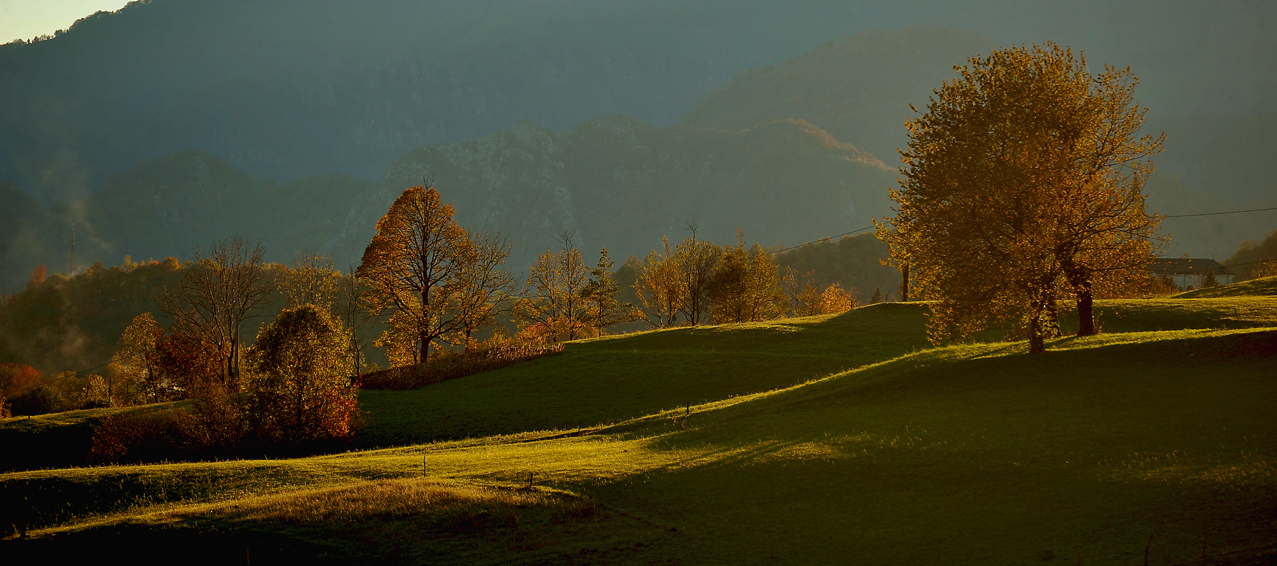
Between Breganze and Bassano del Grappa the foothills turn gentle and rolling, drawn by orderly vine rows that follow the curves of the slopes. These are largely volcanic soils, with a microclimate ideal for the vine. This is the home of Torcolato, the celebrated sweet wine made from Vespaiola grapes and known, with good reason, as «the gold of Breganze».
In autumn these hills put on a refined show. The vineyards blaze an intense yellow that melts into the copper of chestnut and hornbeam woods. Cherry trees rise among the vines, their leaves turning fiery red: a detail that makes this landscape unique. The finest views come from the ridge roads, when the low sun lights up the rows one by one.
The area is dotted with historic villages and remarkable architecture. At Lugo di Vicenza, on the hills of Lonedo, stands Villa Godi Malinverni, the first villa designed by Andrea Palladio, as he himself recalls in his Four Books of Architecture. From its loggia the view takes in the Vicenza Prealps.
A little further east, Marostica enchants with its chessboard square and two castles joined by crenellated walls that climb the hillside. On the surrounding slopes, solitary towers and bell towers rise from the green like exclamation marks.
The journey ends in Bassano del Grappa, set along the Brenta. The wooden Ponte degli Alpini, designed by Palladio and rebuilt several times, is the symbol of the town. Walking across its boards at sunset, with the river flowing green below, is a small ritual.
The photo spot
The Scaliger walls of Marostica. Walk up from the Castello Inferiore to the Castello Superiore along the path that skirts the battlements: the walls zigzag down the hillside, surrounded by olive trees and colourful cherry trees, while below the chessboard square traces its perfect geometry. Best light: mid-afternoon, when the sun falls full on the slope..
At the table
No trattoria in the area is without bigoi all’anatra, thick hand-pressed spaghetti dressed with a fragrant duck ragù. Many wineries offer tastings with cured meats «de casada», made to family recipes. A dry Vespaiolo goes with the starters; Torcolato rounds off the meal with notes of honey, apricot and dried fruit.
4. Campolongo, Verena and Val Galmarara: golden larches on the roof of the Altopiano
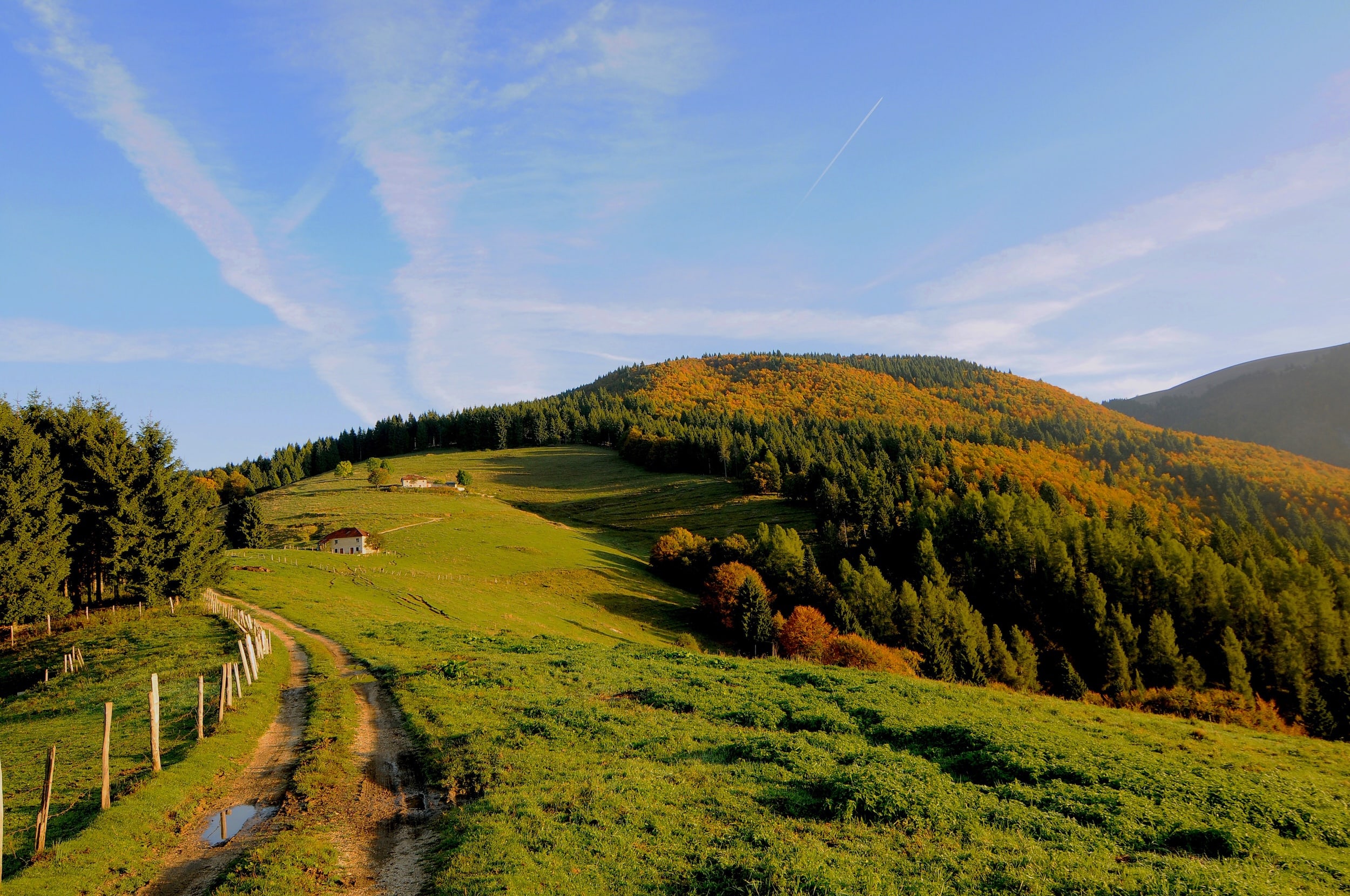
On the western edge of the Altopiano dei Sette Comuni, between Roana and Rotzo, the mountain opens into wide upland plains overlooking the Val d’Astico. This is the realm of Campolongo and Monte Verena, where in autumn the pastures turn ochre and the larches, the only conifer in our mountains to shed its needles each autumn, become golden torches among the dark fir woods.
Here, history is written in stone. On the summit of Verena, at over two thousand metres, stand the remains of the fort from which, on 24 May 1915, the first cannon shot was fired, marking Italy’s entry into the Great War.
Not far away, at 1,720 metres on Cima Campolongo, rises its twin fort: restored and free to visit, with panels that tell its story.
From the Campolongo car park, an easy loop through spruce woods leads to the Caverna del Sieson, a karst chasm you can look into safely, and then on to the fort.
Two hours on foot, suitable for families too, with the silence broken only by footsteps on fallen leaves
Further north, Val Galmarara is one of the wildest valleys on the Altopiano. You reach it from Camporovere, taking the Val d’Assa road, and it climbs through pastures and woods to the mountain dairy of the same name, beneath the bulk of Cima Dodici.
It is a deeply evocative landscape, scored by Great War trenches and communication passages, which in autumn glows with warm, wistful hues.
The photo spot
The Spitz di Rotzo, a natural balcony hanging over the void of the Val d’Astico. From here the view takes in the headland of Forte Campolongo and the wooded slopes plunging towards the valley floor in a riot of colour. Take care: the viewpoint is exposed and unfenced. Alternatively, in Val Galmarara, look for solitary larches on the pastures at dawn, when the frost makes them sparkle.
At the table
This is the land of mountain dairies and Asiago DOP cheese, best tasted in its aged versions with their bold flavour. On the tables of agriturismi and mountain huts you’ll find polenta with wild mushrooms and game, gnocchi dressed with alpine butter, and Rotzo potatoes, grown in the village’s high fields. A glass of grappa ends the meal and keeps out the chill of the first cold evenings.
5. From Valstagna to Asiago: 4,444 steps to the heart of the Altopiano
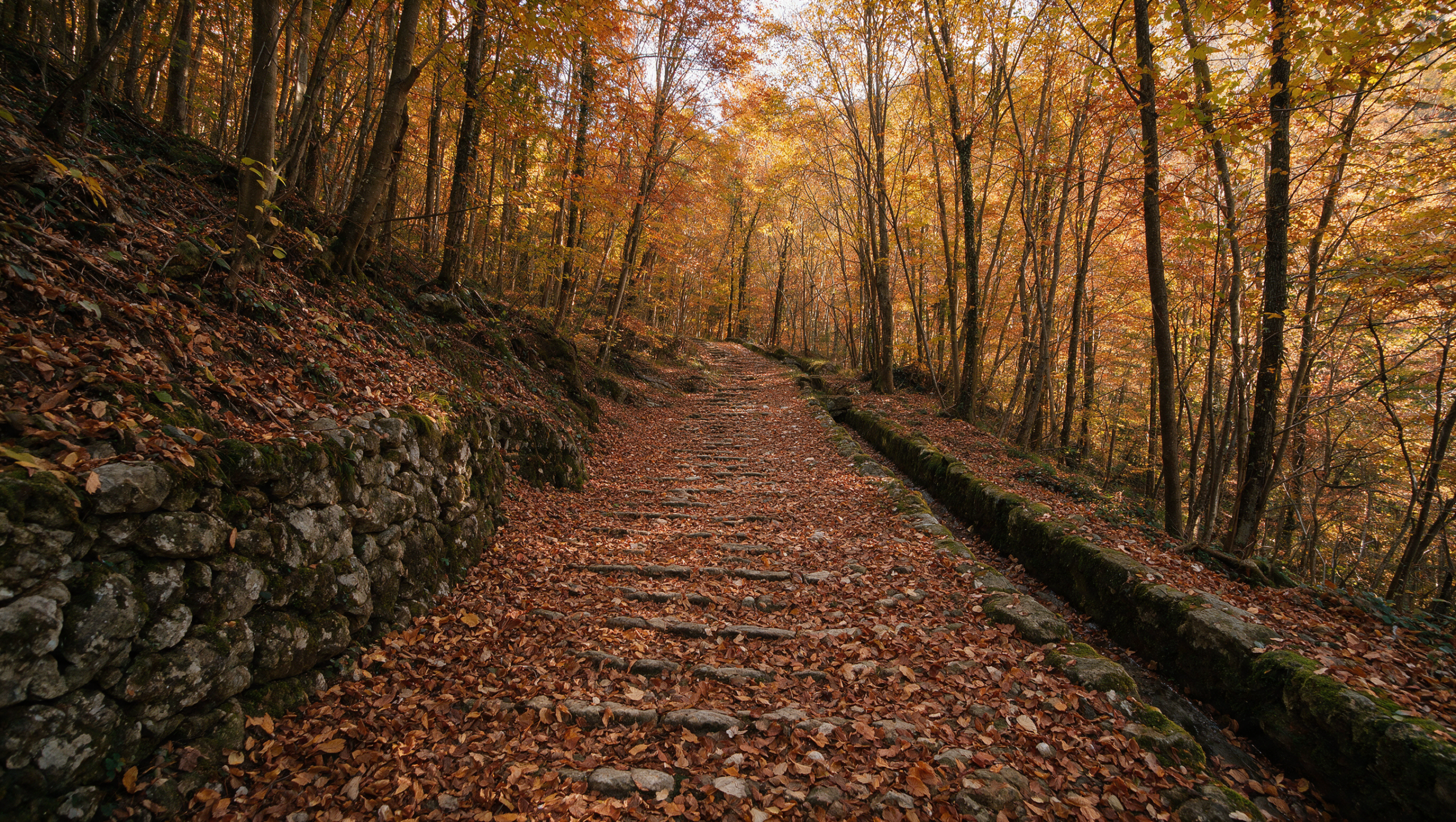
This route is a vertical journey: it sets off from the floor of the Brenta valley and climbs all the way to the heart of the Altopiano dei Sette Comuni. In a few dozen kilometres you cross the terraces of the Valbrenta, the beech woods of the lower slopes and the great upland plains, each with its own autumn palette.
It begins in Valstagna, a village on the river ringed by dry-stone terraces where tobacco was once grown. Behind the village starts the Calà del Sasso, the longest stairway in Italy: 4,444 stone steps built in the fourteenth century to bring timber down from the Altopiano to the Brenta, and from there to Venice, for the shipyards of the Serenissima. Alongside the steps still runs the paved channel where the logs once slid.
The path climbs the narrow Val Frenzela over a height gain of about 744 metres, wrapped in woods that in autumn become a gallery of yellow and copper. Along the way, legend tells of Nicolò, who raced down the Calà to fetch a remedy and save his beloved Loretta.
At the top, in Sasso di Asiago, the view rewards every step.
Heading east you reach Enego, the easternmost of the Altopiano’s Sette Comuni, looking out over the Valsugana. In Piazza San Marco rises the Torre Scaligera, the last remnant of a fourteenth-century castle with four towers.
Just beyond lie the Val Maron and the Piana di Marcesina, known as «Italy’s Finland», where autumn shows itself in copper-coloured peat bogs and fir woods studded with golden larches.
The route ends in Asiago, capital of the Altopiano. On Colle Leiten, at 1,058 metres, the Sacrario Militare war memorial overlooks the basin, surrounded by meadows and woods that turn brown and orange in late October.
The photo spot
The panoramic terrace beside the Torre Scaligera in Enego. From here the view drops sheer to the Valsugana and the Grappa massif, its wooded slopes ablaze with autumn colour. The perfect moment is late afternoon, when warm light floods the valley and the tower stands out against the sky. For a second shot, the steps of the Calà del Sasso disappearing among the leaves.
At the table
The Altopiano is the homeland of Asiago DOP cheese, made in the mountain dairies of Enego and the Marcesina: try it aged, perhaps with mountain honey. In the trattorias you’ll find potato gnocchi, polenta with porcini and chanterelles, slow-cooked game and barley soups. In the Valbrenta the river returns to the plate, with trout and other freshwater fish.